Explainers · 5 min read
5G on a travel eSIM: which providers really deliver it

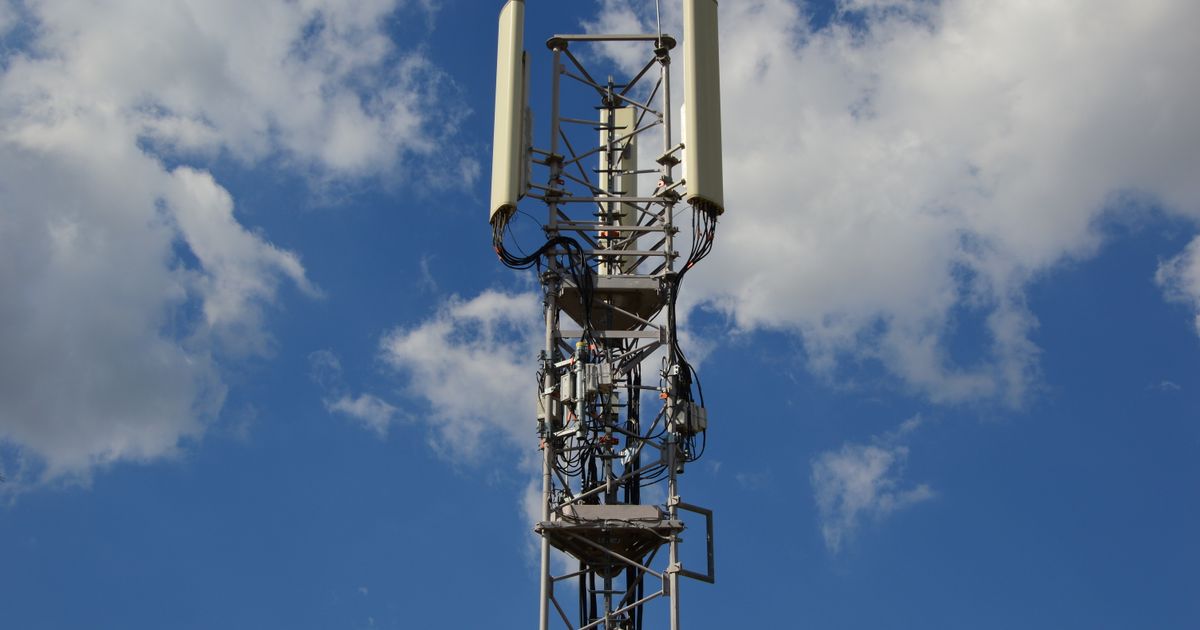
5G on a travel eSIM is a chain of four links, and the plan is only the first. The plan has to include it. The partner network in the country you are in has to offer it to roaming lines. Your phone has to support the bands that network uses. And the phone's network setting has to allow it. Break any link and you get 4G, which is what most travellers see most of the time, whatever the box said.
We record a 5G flag on every plan we track, from the sellers' own plan terms. Here is what the flag says across 236,973 live plans, why you still see LTE, and whether any of it matters for a holiday.
Who flags 5G, from our data
Read in September 2026, across every seller we list.
| Sellers | Live plans | Plans flagged 5G |
|---|---|---|
| Airalo, BuyUKeSIM, ByteSIM, MyEsimGlobal, Nomad, OVOSIM, Saily, Superalink, eSIM4Travel | 32,790 | Every plan |
| ASIMGO, GigaPanda | 9,077 | Most plans, 80 percent and up |
| AirPlans, AlpineSIM, Connect Me Guru, GigSky, MegaEsim, MobiMatter, Mobal, Roamix, Skyalo, Soovia, SparkRoam, Textr, Wanderly, Yatelo, eSIM Hero, eSIMfly | 57,921 | About half to three quarters |
| Breeze, CloudOn, FlyEsim, RoameSIM, Simbye, eSIMCard, eSIMzio | 24,237 | Under half |
| AloOui, Cellesim, CocoRoam, Esimatic, Flysimio, Gigago, Govora, HiRoaming, Lumbus, PikaSim, Telekonek, Travel eSIM, Yesim, abesteSIM, nadanada | 75,713 | No plans |
Two readings of this table. A seller that flags every plan is stating that 5G is available throughout its range, which in practice means wherever its partner network supports it. A seller in the middle is flagging it per country, which is more honest and more useful, because it tells you which destinations actually have it. A seller that flags none either has no 5G agreements or does not bother to say, and the difference matters when you are choosing.
The four links, and where each breaks
The plan
Some plans are 4G only by design, usually the cheapest ones, because 5G wholesale costs more. The plan page says. If it does not mention 5G at all, assume 4G.
The partner network
This is where most 5G disappears. A travel eSIM roams onto a local network under an agreement, and many networks do not extend 5G to roaming lines, or extend it only to some roaming partners. The plan may say 5G, the seller may have 5G in that country through one partner, and your phone may have attached to a different partner that offers roaming lines 4G only. Manual network selection sometimes helps: pick each listed network in turn and watch the indicator.
The bands
5G runs on different frequency bands in different regions, and phones sold for one market do not always support the bands used in another. A US model iPhone or Samsung has good coverage of European bands but not complete, and some mid range Androids sold in one region miss key bands elsewhere. There is no fix for this beyond a different phone. The 4G fallback works fine.
The phone's setting
iPhone: Settings, Cellular, the eSIM line, Voice and Data, must be 5G Auto or 5G On. Android: Settings, Connections, Mobile networks, Network mode, must include 5G. On dual SIM phones, some Androids only allow 5G on one line at a time. Make it the eSIM.
Does 5G matter on holiday?
For maps, messaging, browsing and social feeds, no. 4G handles all of it and the difference is invisible. 5G helps in three cases: uploading a lot of video, crowded places where 4G is congested, and tethering a laptop for real work. Even then, roaming traffic can be deprioritised behind local subscribers, so 5G on a travel eSIM at a busy stadium may be slower than 4G on a local SIM.
What 5G does reliably is drain the battery faster where coverage is patchy, because the phone keeps switching between 5G and 4G. If you are seeing the 5G icon flicker, switching the line to LTE only is a real battery saving with no practical loss.
What the icon on your phone is telling you
The status bar icon reports what the phone is attached to, not what the plan allows. 5G means the phone has registered on a 5G cell. 5G with a small E or plus sign on some Androids means a faster variant. LTE or 4G means the phone is on a 4G cell, which could be because the plan is 4G only, because the partner network offers roaming lines 4G only, because there is no 5G cell in range, or because the phone dropped to 4G to save battery. The icon cannot tell you which. If it matters, run a speed test on both, and compare the upload figure, which is where 5G shows the biggest difference.
Checking your phone's bands
Apple and Samsung publish the 5G bands per model and per region on their spec pages. The bands most used in Europe are n78 and n1; in Japan n77 and n78; in the US n41, n71 and n77. A phone that lists the band the local network uses can connect; one that does not will sit on 4G regardless of the plan. It takes two minutes to check and it is the only way to know before landing whether the 5G flag on a plan means anything for you.
Reading the flag on our tables
Every plan in our comparison tables carries a 5G marker from the seller's own terms. Treat it as a claim about the plan, not a promise about your phone. When two plans are close on price and one carries the flag, take it. When the plan with the flag costs a lot more, ask whether you will do anything in the list above. Most people will not, and the 4G plan is the better buy.
If you specifically need 5G, for uploads or laptop work, choose a seller who flags it per country and names the partner network. Then check that partner's 5G bands against your phone's spec sheet. That is the only way to know before you land.
Why we record it at all
Because sellers advertise it, and a claim that is advertised should be checkable. The flag is one of the four features we record on every plan alongside tethering, top up support and the daily cap, and it is filterable on every country page. It is not a ranking factor, because we rank by price per gigabyte and nothing else. It is there so that when the box says 5G you can see whether the seller actually said so on the plan.
Questions people ask
Do travel eSIMs support 5G?
Many do, some do not, and it varies by country within the same seller. Across the plans we track, some sellers flag 5G on every plan, some on none, and the rest on a share that depends on which partner network they use in each country. Our tables carry the flag per plan.
Why does my eSIM show LTE when the plan says 5G?
Four things have to line up: the plan includes 5G, the partner network in that country offers 5G to roaming lines, your phone supports the 5G bands that network uses, and the phone's network mode allows 5G. Any one missing and you get 4G. The partner network and the bands are the usual culprits.
Is 5G faster on a travel eSIM?
Sometimes. Roaming traffic often gets lower priority than local subscribers, so a 5G roaming connection on a busy tower can be slower than 4G on a quiet one. In practice 5G helps most for uploads and in crowded places. For maps and messaging, 4G is indistinguishable.
Does 5G use more data?
Not for the same task. A map tile is the same size at any speed. What changes is behaviour: video streams at higher quality by default on a fast connection, and that uses more data. If the plan is small, keep video quality capped regardless of the network.
Should I turn 5G off to save battery abroad?
It can help, especially where 5G coverage is patchy and the phone keeps switching. iPhone: Settings, Cellular, the eSIM line, Voice and Data, choose LTE. Android: Preferred network type, LTE. You lose little and gain battery in most tourist situations.
Which sellers are honest about 5G?
The ones who flag it per plan and per country rather than on the front page. A seller who says 5G available everywhere is describing their best case. A seller who says 5G in these 14 countries on these networks is describing what you will get.
Compare plans for the places in this guide
236,973 plans from 61 sellers, ranked by real price per GB, with prices checked against the shops themselves.